
G522 LIGHTSPEED WIRELESS GAMING HEADSET
A NEW STANDARD,
MADE AUDIBLE
Logitech
PUX lead
LAUNCH: Jun 2025
TOOLS: Figma, After Effects, Adobe Suite, Google Suite
BEFORE THE PRODUCT, THE PROBLEM
The G522 LIGHTSPEED is the first headset to ship on a new global HMI standard I authored at Logitech — a tiered framework that defines how every Logitech G, Astro, Pro, business, and education headset talks to its user. It launched in June 2025 as the audio flagship of the G5 Series and the successor to the popular G733 LIGHTSPEED.
But before there was a G522, there was a problem.
A Portfolio in Conflict
After the Astro acquisition, Logitech's headset portfolio had grown across five distinct product lines — Logitech G for gaming, Astro for console, Pro for esports, business for video collaboration, and education for classrooms. Each line had evolved its own conventions for button placement, control type, and audio feedback. A user picking up two Logitech headsets would find different controls on different sides of the cup, different gestures for the same action, and entirely different voice prompt styles.
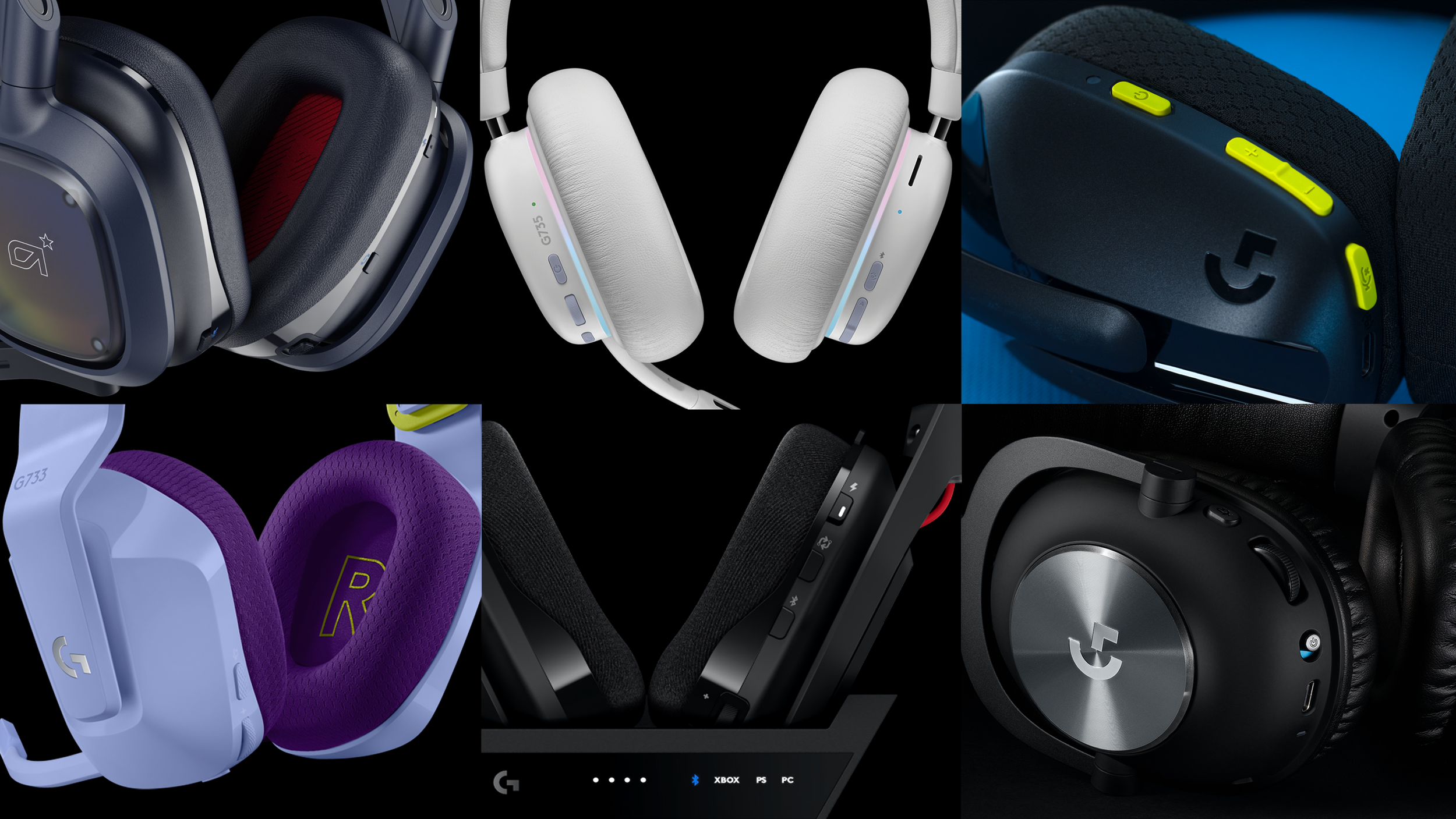
A subset of the headset portfolio at the time of the audit. Different cup sides, different control types, different audio feedback — all needing to feel like one company.
I led an audit across the full headset portfolio, pulling every shipping product into a single comparison and mapping the variability — left vs. right cup, button vs. roller vs. rocker, where mute lives, what the device says when it powers on. Alongside the audit, I ran qualitative beta interviews with a dozen target gamers, asking them to handle every product and walk me through how they thought about each touchpoint: muscle memory between sessions, how they distinguish controls by feel alone, how they prefer specific functions to be expressed in hardware, and how they hear and trust the audio feedback.
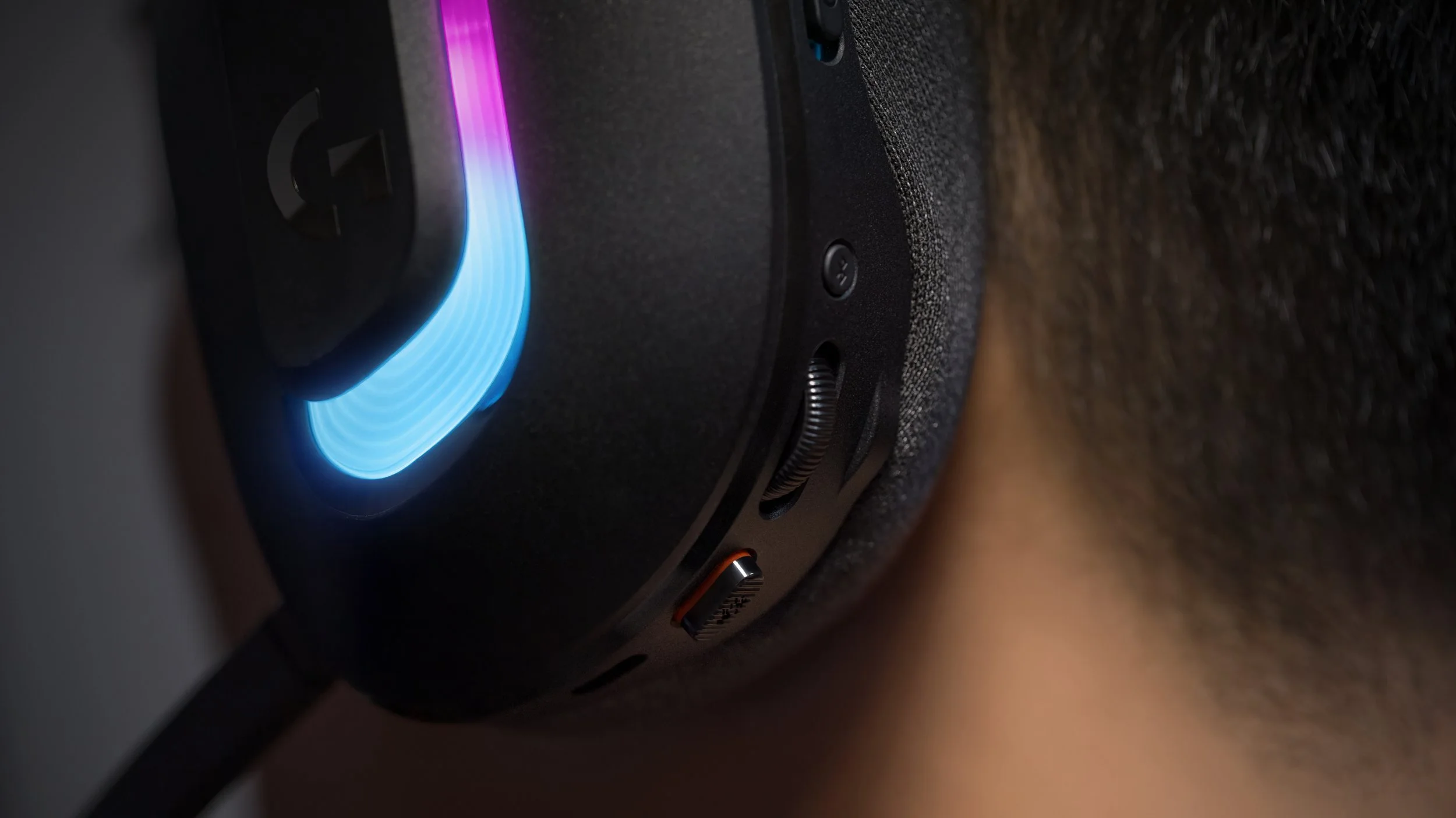
The mid-tier control language: continuous volume roller, toggle-style mute, flush Bluetooth button.
A Tiered Framework
The result was a tiered HMI framework — entry, mid, and premium — that defined what hardware UX each headset should hold for its price point and audience. I aligned the framework first internally with product managers around tiers and engineering around price-point feasibility, then expanded it collaboratively with the B2B team and Education team, both of which had their own product lines and constraints to fold in. We ran three rounds of alpha testing on G522 specifically, validating both fit comfort and the standard itself in practice.
We also took the opportunity to elevate audio feedback. Earlier Logitech headsets had used licensed voice actor recordings — beautiful when they shipped, but bound by time-limited licensing windows that forced re-recording or re-licensing every few years. We replaced that with a synthesized, brand-tuned voice with indefinite use and per-word pronunciation control through SSML. State changes like "Bluetooth" and "Lightspeed" could now be tuned precisely and validated through global alpha testing on dimensions of clarity, friendliness, and brand alignment.
G522, the First on the Standard
By the time G522 spec'd up, most of the HMI decisions were already made. The framework pre-defined the control language for the mid tier: a continuous volume roller (mirroring Logitech G's gaming-mice scroll wheel for cross-device muscle memory), a flush Bluetooth button engineered to prevent accidental source switching, and a toggle-style mute that lets users confirm state blindly by touch. I worked closely with the Product Owner to land the connectivity scheme — LIGHTSPEED 2.4 GHz wireless, Bluetooth, and USB-C wired — and the standard handled the rest. HMI integration that historically took months took weeks.
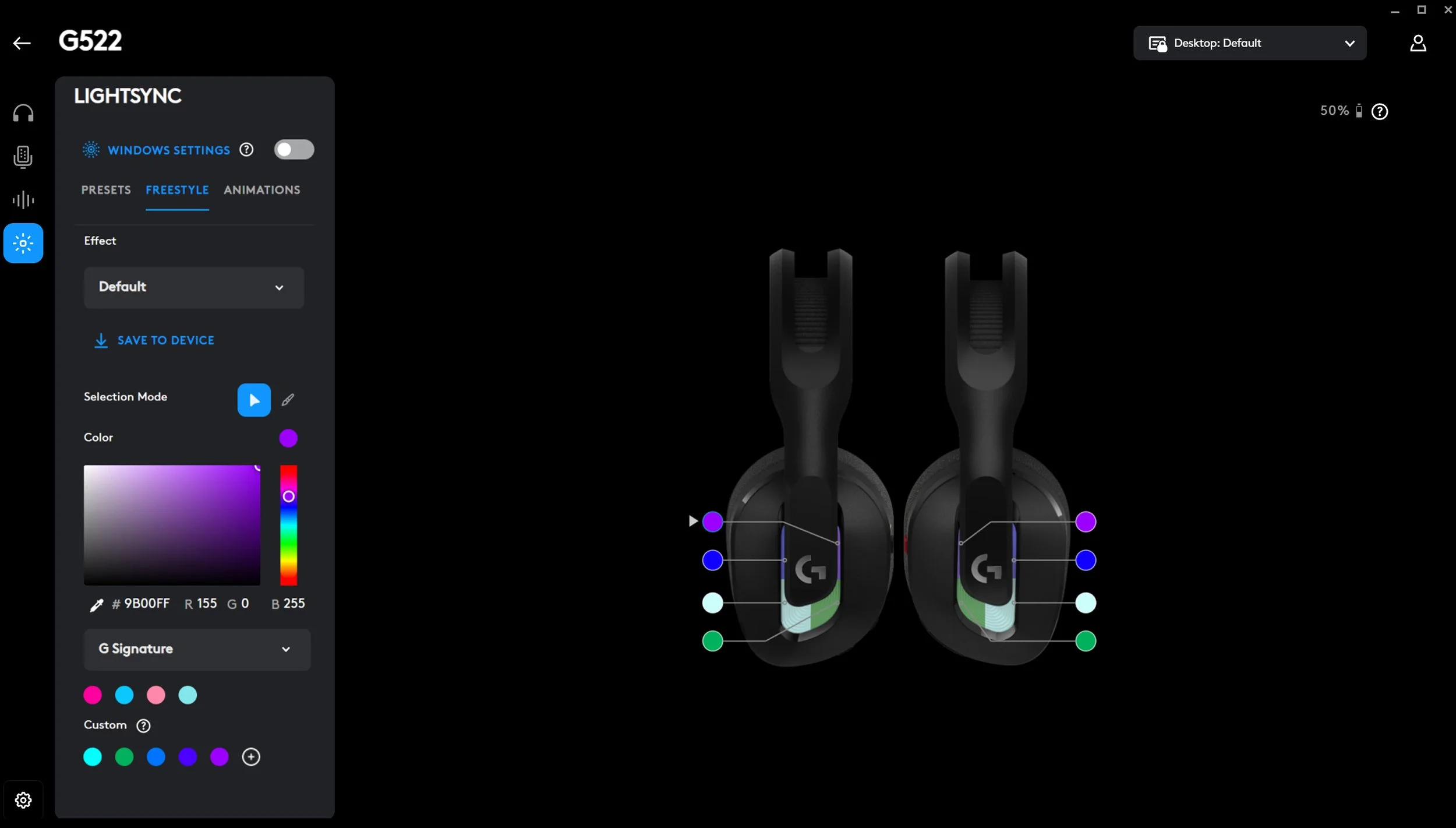
Four customizable LIGHTSYNC RGB zones per ear cup. Algorithmic effects let users select their colors while preserving the designer's transitions and motion.
Color, on the User's Terms
G522 was also the first headset to ship on the algorithmic lighting strategy first introduced on the G515 keyboard. With four customizable LIGHTSYNC RGB zones per ear cup — eight total — the algorithmic effects let users select primary and secondary colors in G HUB while preserving the designer-defined transitions, motion, and brand expression. The light language is fixed; only the inputs vary. I specified the runtime parameters and the G HUB interface so the customization could land without compromising the effect's intent.
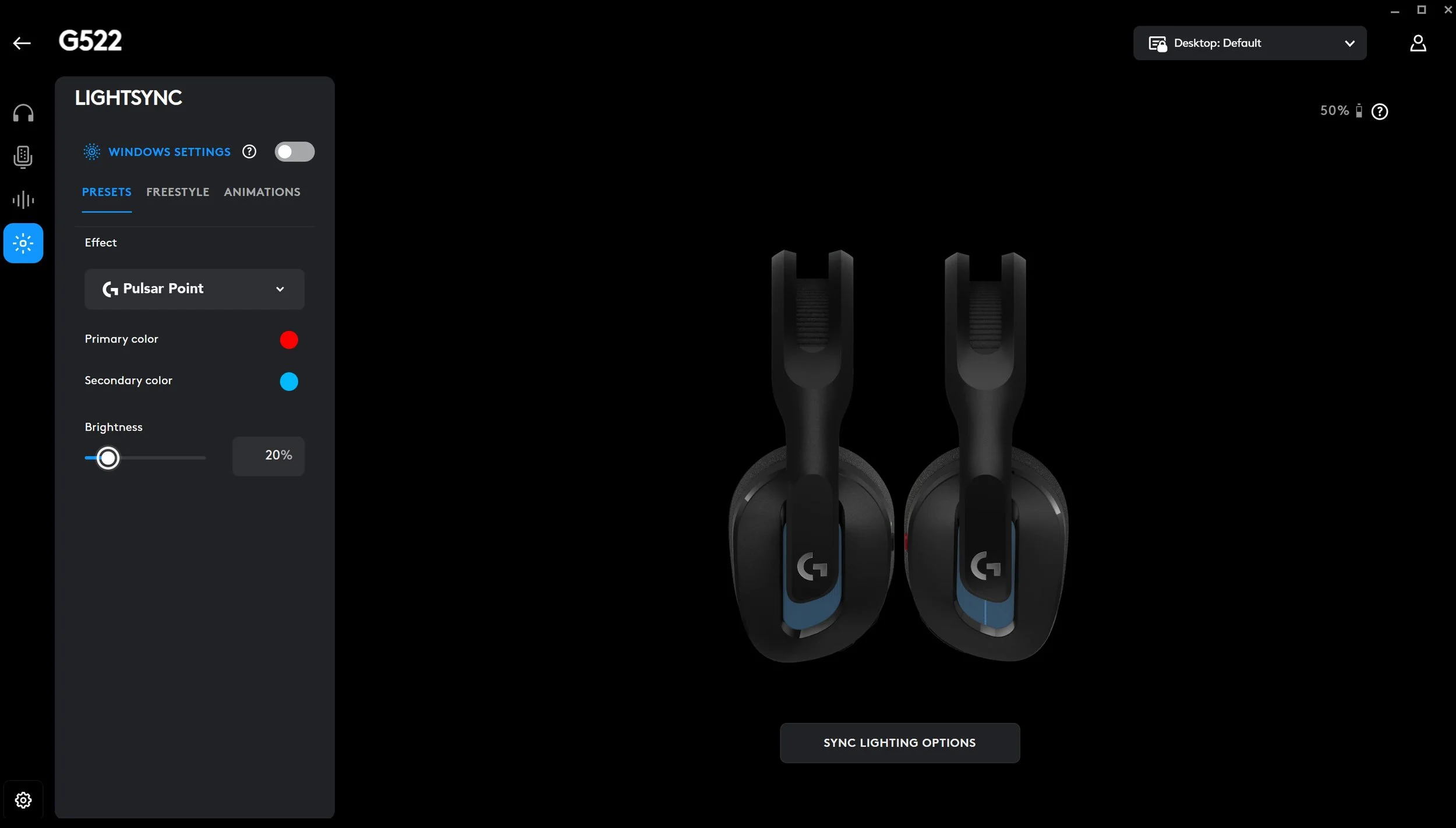
G HUB color customization for G522: pick the colors, keep the effect.
I also defined the companion experience touchpoints across G HUB on Mac and PC and the Logitech G mobile app — the 10-band EQ, three onboard custom profiles, the personalized lighting controls, the mic settings.
The G522 is not just a headset. It is the first proof that the standard works.
-
First product on the global HMI standard: The framework that defines control language, audio feedback, and voice prompts across Logitech G, Astro, Pro, business, and education headsets.
First headset on algorithmic lighting: Eight LIGHTSYNC RGB zones with user-customizable primary and secondary colors, retaining designer intent for transitions and motion.
Tri-mode connectivity, sustainably built: LIGHTSPEED, Bluetooth, and USB-C in a 290g headset crafted with 27% post-consumer recycled plastic.
Up to 90 hours of play, with strong customer reception: 40 hours with RGB on, 90 hours with RGB off. 4.6 out of 5 stars across hundreds of customer reviews on Best Buy and Logitech's site.